Some projects stand out because of their scale. Others stand out because of their complexity. This one falls firmly into the second category. At 5800 North Bay Road in Miami Beach, we are engineering one of the most technically demanding vessels we have ever designed; a fully acrylic, water-filled box that cantilevers off the rear of the second floor of the home.
It is small in footprint compared to the main pool and water features on the property, but it is by far the most specialized element on the site. And that is exactly why it matters. Projects like this prove that complexity has nothing to do with size. It has everything to do with what the vessel is being asked to do.
A Pool That Is Literally an Acrylic Box
The idea sounds simple. A clear acrylic rectangle, filled with water. But building a vessel entirely out of acrylic introduces engineering challenges that do not exist with concrete or steel. And in this case, the overall configuration has never been done before.
Acrylic behaves in ways that traditional construction materials do not. It flexes under load. It expands and contracts noticeably with temperature changes. And it requires a fabrication process that is far more exact because the panels must remain both structurally reliable and optically clear when submerged.
Unlike concrete shells, large acrylic vessels are not produced as a single molded piece. Each panel is cast individually at the manufacturing facility. The walls and the floor are all separate components that must be chemically bonded together under controlled conditions. Those bonded corners become some of the most important elements in the entire vessel, since they carry the outward force of the water and absorb the thermal movement of the acrylic itself. If the bonding is not executed perfectly, the panels can begin to separate and the vessel will fail.
Because of this, a fully acrylic pool behaves more like a structural aquarium than what most people think of as a pool. Every surface is both a viewing panel and a load-bearing wall. The brackets that support the vessel must manage deflection without twisting the structure. Each penetration for plumbing or returns has to allow the acrylic to move independently without damaging the seal. Even the skimmer and fittings have to be custom designed because the vessel cannot tolerate rigid stress the way a concrete shell can.
In short, this is not just a clear box filled with water. It is a structural system made from a material with its own set of behaviors and limitations. Every detail has to be engineered specifically for this vessel, in this environment, under this exact set of conditions.

Research & Development Mockups
Because a vessel like this has never been built before, the process cannot move directly from design to construction documents. Before anything can be engineered with certainty, the components have to be tested, refined and proven through a series of controlled mockups. In a fully acrylic pool, a fitting that is even slightly off in geometry, tolerance or movement can compromise the entire vessel, so the first phase of the project is research and development.
We began by fabricating small scale mockups to understand how our custom stainless steel fittings would interface with the acrylic. The first test block was a twelve inch by twelve inch by three inch acrylic sample with a precision drilled two and a half inch opening. This allowed us to evaluate how the bulkhead assembly seated into the acrylic, how the gaskets compressed and whether our initial tolerances were correct. It also gave us immediate feedback on how much movement the fitting could accommodate without disturbing the seal.
Once the small sample was validated, we moved to a full section of acrylic representing the exact floor to wall transition of the actual vessel. This section was used to test the larger skimmer assembly and the more complex geometry of the primary fittings. Every dimension was checked down to the millimeter using precision digital calipers to ensure that the seating surfaces, gasket compression and core drill diameters were performing exactly as modeled.
These mockups are not a formality. They determine whether core drills need to be enlarged or tightened, whether a fitting needs a revised diameter or length, or whether the acrylic requires a different tolerance at specific connection points. They allow us to confirm that the bulkhead assemblies remain watertight during compression and thermal movement, and they validate the detailing long before any full scale fabrication begins.
Only after the components prove themselves through these physical tests can we finalize the engineering package. For a vessel with no precedent, this step is essential. Everything must be developed, tested and refined specifically for this project, in this location, under these conditions.


Designing Custom Stainless Steel Fittings for an All-Acrylic Vessel
A fully acrylic pool creates a problem that does not exist in traditional concrete vessels. Every connection point between the pool and its mechanical system has to pass through a material that flexes, expands, contracts and transmits load differently than steel, PVC or any rigid plumbing assembly. In other words, none of the standard fittings used in normal pool construction will work here.
To solve this, we had to design an entirely custom family of stainless steel fittings made specifically for this vessel. They have to perform three critical functions at once. They must create a watertight connection to the acrylic. They must allow the acrylic to move independently without stressing the plumbing. And they must present a clean, luxury finish that complements the transparency of the vessel rather than working against it.
Achieving this requires more than simply machining stainless parts. Each fitting must be fabricated so that it seats precisely into the acrylic penetration, interfaces with the bulkhead assembly and maintains its own structural integrity under pressure. Because the vessel cannot accept rigid stress, the fittings have to isolate the plumbing and create a controlled movement zone that absorbs the thermal expansion and contraction of the acrylic without disturbing the seal.
We are working directly with a specialty steel fabricator to develop and test mockups of these components. This includes evaluating tolerances between the acrylic and the stainless steel, confirming how each part reacts under simulated movement, and ensuring the finished fitting meets the aesthetic expectations of a high-end residential project. Every detail, from the geometry of the seating surface to the finish of the exposed face, is engineered specifically for this vessel and this application.
These fittings are one of the reasons a pool like this cannot rely on off-the-shelf parts. A custom acrylic vessel demands custom hardware, engineered and fabricated to accommodate the behavior of the material and the expectations of the project. And until those components are tested and proven, the vessel cannot move into full assembly.

Thermal Movement Means Nothing Can Be Rigid
One of the most critical challenges in all-acrylic vessels is temperature-driven expansion and contraction. Acrylic moves. Even a small change in temperature will cause it to grow or shrink measurably because it has a much higher coefficient of thermal expansion than materials like concrete or steel. This is the same reason large steel structures expand in the heat. The Eiffel Tower, for example, is roughly six inches taller in the summer than in the winter. The movement is normal — we just don’t notice it because the structure can absorb it.
Acrylic behaves the same way, except on a smaller scale and with far less tolerance for restraint. If you connect a rigid pipe directly to an acrylic wall, the acrylic will eventually tear that penetration apart. That is why this vessel requires custom bulkhead assemblies. These fittings allow the acrylic to expand and contract independently of the plumbing, creating a watertight joint that can move without breaking its seal.
This is a level of detailing most projects never require and one of the reasons an all-acrylic vessel demands engineering expertise that goes far beyond conventional pool work.
Perfect Alignment Between the House and the Vessel
The plumbing lines that serve the vessel must pass through the home, which means every penetration through the house structure has to align exactly with each corresponding opening in the acrylic shell. With an all-acrylic vessel, that alignment has to be exact because the panel fabrication fixes the location of every fitting.
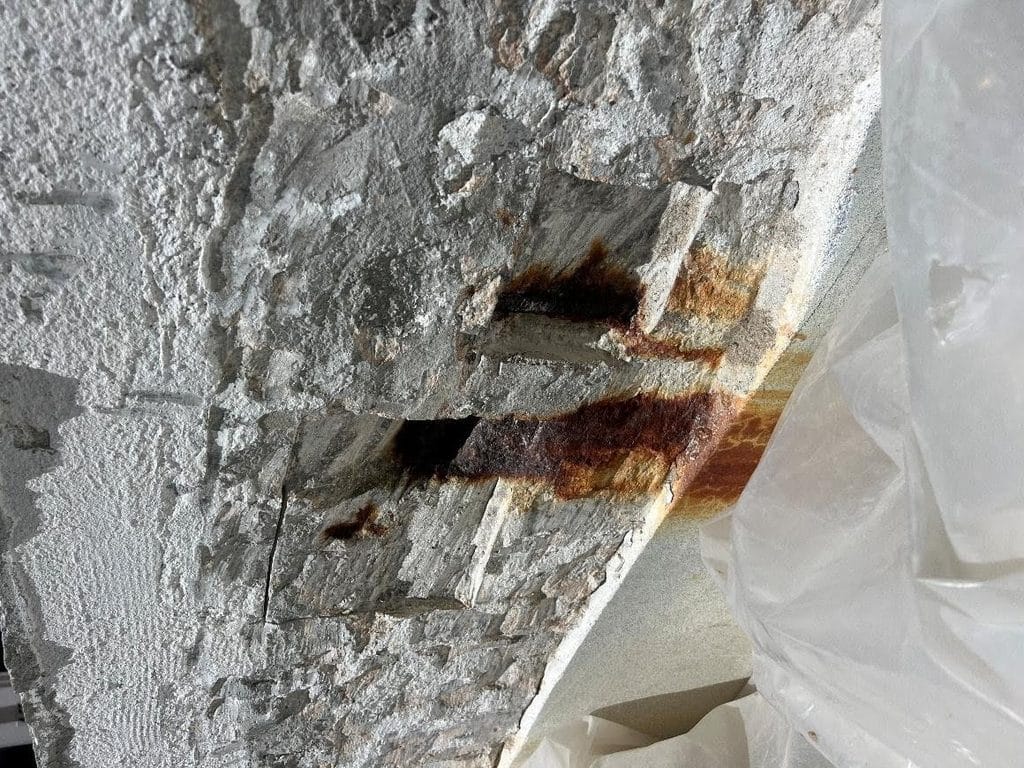
To establish the correct penetration points, we conducted an x-ray scan of the home and cross referenced those findings against the structural drawings. This allowed us to identify reinforcement, concealed framing and load-bearing elements that could not be disturbed. Only after confirming those conditions could we determine where core drills were permissible and match those locations to the penetration points required in the acrylic.
This coordination ensures that the plumbing routes clear structural steel, that the load paths within the home remain uninterrupted, that the acrylic penetrations land precisely where the vessel demands and that the natural movement of the acrylic does not place stress on pipes fixed within the building. None of this can be estimated or assumed. The alignment between the structure and the vessel has to be proven before any fabrication begins.
Once the allowable penetration zones were established, those locations were integrated directly into the final acrylic panel layout. The vessel and the building are therefore coordinated from the outset, allowing both systems to function as intended without interference.

Mechanical Planning for a Vessel That Behaves Differently
All-acrylic pools respond to heat very differently than concrete vessels. Acrylic conducts and retains heat at a much higher rate, and in this case the vessel is suspended on the second level of the home with exposure on every side. With no surrounding soil to moderate temperature, the water is influenced directly by sun, ambient heat, and radiant gain from the structure.
Under those conditions, a traditional mechanical approach is not sufficient. The vessel requires a dedicated chiller to keep the water within a controlled temperature range. Without active cooling, the water would climb well above comfortable or safe levels because the acrylic transfers environmental heat into the vessel far more readily than a typical concrete shell.
It is a small pool in terms of footprint, but the mechanical requirements are far more demanding than a standard residential installation. The scale does not reduce the complexity. The material and the conditions dictate the system.
A Collaboration That Touches Every Discipline
A vessel like this cannot be designed or engineered in isolation. It sits at the point where architecture, structural engineering, steel fabrication, acrylic manufacturing, aquatic engineering, mechanical design, building envelope coordination and general construction all intersect. Each discipline brings its own requirements and limitations, and every one of them influences what the vessel is allowed to do.
The work succeeds only when those specialties operate as a single coordinated team. The architect controls the geometry and sightlines. The structural engineer defines what the house can support. The steel fabricator and acrylic manufacturer determine what can be produced and how the panels must be handled. The aquatic and mechanical teams establish how the vessel functions and how it interacts with its equipment. None of those responsibilities are independent. Every one depends on the others being correct.
For a project that has no precedent, that coordination becomes the core of the process. Nothing is drawn without being verified across the relevant disciplines, and nothing moves forward until each specialty confirms that the design respects its constraints. This level of collaboration is not optional. It is what allows a vessel with this degree of complexity to be engineered, fabricated and built successfully.


Why a Small Pool Can Be the Most Complex Element on a Property
On a waterfront estate like 5800 North Bay Road, the main pool is large, intricate, and highly detailed — but the all-acrylic vessel is the most technically demanding feature on the site. It is a reminder that complexity is not measured by gallons or square footage. It is measured by how far you have to reach beyond typical solutions.
These are the types of projects where Smart Aquatics is at its best. When the design requires invention. When the engineering has no template. When the vessel must be built around constraints that cannot be modified. When the coordination spans every discipline and the tolerance for error is zero.
This is why clients at this level trust us with these types of challenges.